CLINICAL SERVICES · STRUCTURAL HEART
TAVI (Transcatheter Aortic Valve Implantation)
TAVI replaces a narrowed aortic valve through a catheter, without opening the chest. Here is what aortic stenosis is, who is suited to TAVI, how it is done and what recovery looks like, from Dr. Shantanu Deshpande, interventional cardiologist in Thane and Mumbai.
What is TAVI?
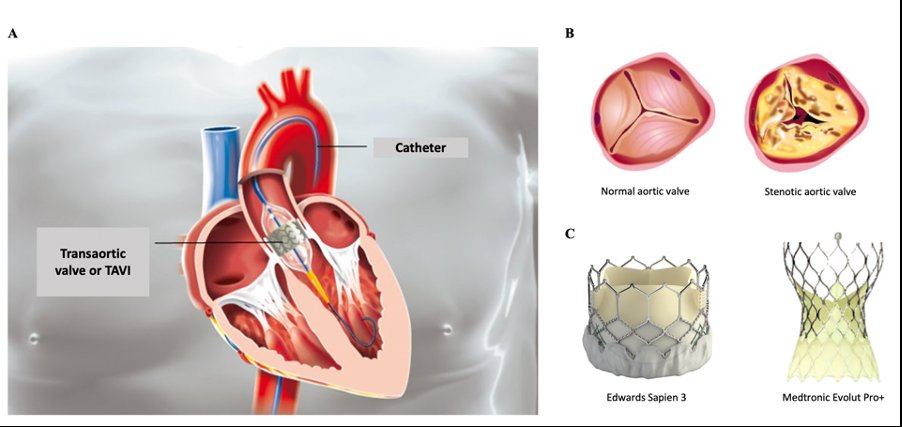
TAVI (transcatheter aortic valve implantation), also called TAVR (transcatheter aortic valve replacement), is a way of replacing a narrowed aortic valve without open-heart surgery. A new valve, made of animal tissue on a flexible metal frame, is folded onto a thin tube (catheter), guided to the heart through an artery, usually in the groin, and opened inside the old valve. The new valve takes over immediately and the old leaflets are pushed aside.
The problem: aortic stenosis
The aortic valve is the one-way door between the heart's main pumping chamber and the aorta, the main artery to the body. In aortic stenosis the valve becomes stiff and narrow, most often because of calcium build-up with age, or because a person was born with a two-leaflet (bicuspid) valve. The heart must then work harder to push blood through.
Typical symptoms are breathlessness on effort, chest pain or tightness, dizziness or fainting, and tiredness or reduced walking ability. Many people put these down to "age" for a long time. Once severe aortic stenosis causes symptoms, medicines cannot fix the valve, and without valve replacement the outlook worsens. Tell your doctor early if you notice these symptoms, especially fainting or chest pain on effort.
Who is TAVI for?
TAVI is considered for people with severe, symptomatic aortic stenosis. The choice between TAVI and open surgical valve replacement (SAVR) is made by a heart team that includes a cardiologist, a cardiac surgeon, an imaging specialist and an anaesthetist. In general:
- TAVI is usually favoured for older patients (around 75 years and above) and for those at higher risk from open surgery because of age, frailty, lung, kidney or other conditions, or earlier heart surgery.
- Surgery is often preferred for younger, lower-risk patients, and when other heart problems need to be repaired at the same time.
- Anatomy matters: the size of the valve ring, the amount and position of calcium, the shape of the valve (two or three leaflets), the position of the coronary arteries, and the size of the leg arteries.
- Patient preference counts. The decision is shared with you and your family.
Tests before TAVI
Planning is thorough, and most of the work happens before the day of the procedure.
- Echocardiogram to measure how tight the valve is and how well the heart pumps.
- CT scan of the heart, aorta and leg arteries to size the valve and plan the route.
- Coronary angiogram to check for blocked heart arteries, which may be treated with angioplasty before or around the time of TAVI.
- Blood tests, ECG, kidney function and a dental check to remove infection risk.
- Assessment of strength and frailty, and a review of all medicines.
How is TAVI done?
- Anaesthesia. Most procedures use local anaesthesia with sedation. Some patients need general anaesthesia.
- Access. Through a small puncture in the groin artery (transfemoral route), which is closed with a stitch-like device at the end. If the leg arteries are too small, other routes are possible and will be discussed with you.
- Pacing. A temporary pacing wire is placed to control the heart rate while the valve is positioned.
- Valve delivery. The new valve is guided across the old one. Depending on the valve type, it is opened by a balloon (balloon-expandable) or expands by itself (self-expanding). The heart rate is briefly raised by pacing for accurate placement.
- Check. Echo and X-ray dye pictures confirm that the valve sits well and does not leak.
- Closure. The catheters are removed and the puncture site is closed.
The procedure typically takes one to two hours. Many patients are up the next day and go home within two to three days, depending on recovery and whether a pacemaker is needed.
TAVI compared with open-heart valve surgery
| TAVI | Surgical valve replacement | |
|---|---|---|
| Incision | Small puncture in the groin | Chest opened (sternotomy) |
| Heart-lung machine | Not needed | Needed |
| Hospital stay | Usually a few days | Usually longer |
| Recovery | Often faster return to normal activity | Several weeks to months |
| Best suited to | Older or higher-risk patients, and selected others | Younger, lower-risk patients; need for other repairs |
| Long-term data | Growing; good results at the years studied | Longest track record |
What are the risks?
TAVI is a major procedure, but it is less invasive than open surgery. Risks vary by patient and your team will explain them for you. They include bleeding or damage at the groin artery, stroke (the risk is lowered by careful technique and sometimes protective devices), a need for a permanent pacemaker because of heart block, a small leak around the new valve, kidney strain from contrast dye, and, rarely, serious complications that may need emergency surgery. The long-term durability of TAVI valves is still being studied, and this is discussed especially for younger patients.
After TAVI
You will be monitored for rhythm and bleeding in the first days and will have an echocardiogram before discharge. Most patients take blood-thinning medicine as advised by the cardiologist. Follow-up includes check-ups and echocardiograms at about one month and then yearly. Look after your teeth and tell every dentist and doctor that you have a valve implant, because infection of a valve (endocarditis) must be prevented. Most patients notice that breathlessness, tiredness and chest pain improve in the weeks after the procedure.
Dr. Shantanu Deshpande and structural heart care
- TAVI and structural heart intervention are among Dr. Deshpande's areas of expertise, alongside valvular interventions and complex coronary intervention.
- More than 25 years in cardiology and interventional practice, including as Director of the Cath Lab at Dr Godbole Heart Care Hospital, Thane.
- Heart-team approach. The decision between TAVI, surgery and medicines is made together with the cardiac surgeon, imaging and anaesthesia teams, and discussed openly with you.
- Coronary and valve care under one plan. Many people with aortic stenosis also have blocked arteries. Experience in angioplasty, imaging-guided PCI and rotablation helps in planning treatment for both.
- Academic cardiology. Head of Department of Cardiology at D Y Patil Medical College, with teaching and clinical research.
See the About page for qualifications. For a second opinion on aortic stenosis, bring your echo, CT and angiogram reports.
Frequently asked questions
What is TAVI?
TAVI (transcatheter aortic valve implantation), also called TAVR, replaces a narrowed aortic valve through a catheter, usually from the groin, without open-heart surgery.
What is aortic stenosis and what are its symptoms?
Aortic stenosis is narrowing of the aortic valve, most often due to calcium build-up with age. Symptoms include breathlessness on effort, chest pain, dizziness or fainting and reduced stamina.
Who is a candidate for TAVI?
People with severe aortic stenosis who have symptoms, assessed by a heart team. TAVI is generally favoured for older patients (around 75 and above) and for those at higher risk from open surgery. Younger, lower-risk patients are often advised surgery, but each case is individual.
Is TAVI better than open-heart surgery?
Neither is better for everyone. TAVI avoids opening the chest and usually means a shorter stay and faster recovery. Surgery has the longest track record and may be better for younger patients or when other repairs are needed. The heart team recommends what suits you.
How long does TAVI take and how long is the hospital stay?
The procedure usually takes one to two hours. Many patients go home within two to three days.
Is TAVI done under general anaesthesia?
Often it can be done with local anaesthesia and sedation. Some patients need general anaesthesia. Your anaesthetist will advise.
Will I need a pacemaker after TAVI?
A small proportion of patients develop heart block after TAVI and need a permanent pacemaker. Your rhythm is monitored closely after the procedure.
How long does a TAVI valve last?
Results are good at the years studied so far, and data continue to grow. Durability is a key point of discussion for younger patients, so the decision is made carefully with the heart team.
Can blocked heart arteries be treated at the same time?
Many patients with aortic stenosis also have coronary blockages. These may be treated with angioplasty before or around the time of TAVI, depending on the situation.
How much does TAVI cost?
The cost depends mainly on the valve type, the hospital, any additional procedures and length of stay. Please contact the clinic for guidance on your individual case.
Where can I get TAVI evaluation in Thane or Mumbai?
Dr. Shantanu Deshpande consults in Thane and Chembur, Mumbai. Book an appointment and bring your echo, CT and angiogram reports for assessment.
Concerned about aortic stenosis?
A personal assessment is the only way to know what is right for you. Bring your reports, ECG, angiogram and echo, and a list of your medicines.
Related services
This page gives general information to help patients understand a procedure. It is not medical advice and does not replace a consultation. Whether a procedure is right for you depends on your own tests and health. In an emergency, go to the nearest hospital. Last updated 25 October 2026.