CLINICAL SERVICES · CORONARY INTERVENTION
Rotablation (Rotational Atherectomy)
Rotablation treats hard, calcified blockages in the heart arteries so that a stent can open fully. Here is what it is, how it is done, who needs it and what to expect, from Dr. Shantanu Deshpande, an interventional cardiologist and proctor for rotablation in Thane and Mumbai.
What is rotablation?
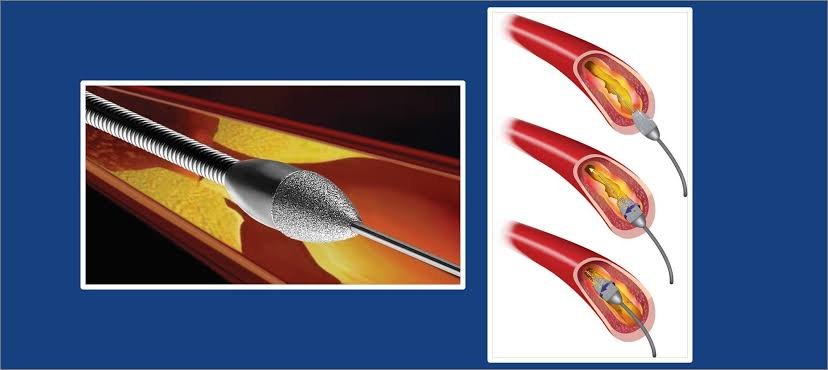
Rotablation, also called rotational atherectomy, is a technique used during angioplasty to remove hard, calcified plaque from inside a heart artery. A tiny burr, about the size of a pinhead to a small bead and coated with microscopic diamond chips, spins at very high speed and gently sands the calcium away. The particles are extremely small, smaller than red blood cells, and are carried away in the bloodstream and cleared by the body.
Rotablation is not a replacement for angioplasty and stenting. It is a preparation step. Once the calcium has been modified, a balloon and stent can be expanded properly.
Why does calcium in the artery matter?
Over the years, cholesterol plaque in the artery wall can harden with calcium. Think of the artery as a rubber pipe that has turned into a stiff, chalky tube. A balloon may not open it, and a stent placed in it may not expand fully.
A stent that does not open fully is more likely to clot or to narrow again. Treating the calcium first gives the stent the best chance of opening completely and staying open.
In which patients is it done?
Rotablation is considered when angiography, CT scan or intravascular imaging (IVUS or OCT) shows heavy calcium, and a balloon alone is unlikely to open the artery or the stent is unlikely to expand. It is more often needed in:
- older patients, because calcium builds up with age
- people with diabetes
- people with long-standing high blood pressure or high cholesterol
- people with chronic kidney disease or on dialysis
- long-standing blockages, including some chronic total occlusions
- blockages at the start of an artery (ostial lesions) and some left main or bifurcation lesions
- patients in whom a balloon could not cross or open the blockage in an earlier attempt
Not every calcified blockage needs it. Some blockages are better treated with other calcium-modification methods (see below), and some situations call for more caution, such as very twisted arteries, blockages with fresh clot, or a very weak heart pump. The decision is made case by case after looking at your angiogram and imaging.
How is rotablation done, step by step?
- Assessment. Your symptoms, ECG, echo and blood tests are reviewed, including kidney function. Blood thinners and other medicines are planned in advance. You fast for a few hours.
- Access. Under local anaesthesia and light sedation, a thin tube is placed in an artery at the wrist (or sometimes the groin). You are awake and comfortable.
- Angiogram and imaging. Contrast dye shows the blockage. IVUS or OCT may be used to measure the artery and see exactly how much calcium is present and where.
- Special wire. A very thin, flexible wire (the rotablator wire) is passed across the blockage.
- Burr passes. The burr is advanced over the wire and spins in short runs, usually with a small burr first and a larger one if needed. A cooling flush runs through the system. You may hear a whirring sound and feel pressure, but the procedure is generally well tolerated.
- Heart rhythm safety. The heart rate may slow briefly during a run. In some situations a temporary pacing wire is placed as a precaution.
- Balloon and stent. The wire is exchanged for a standard wire. The artery is then dilated with a balloon, often a high-pressure or special balloon, and a drug-eluting stent is placed.
- Final check. Imaging is repeated to confirm that the stent has opened fully and is well placed.
The procedure usually takes one to two hours, though complex cases can take longer. Most patients stay in hospital for one to two days.
What are the risks?
Rotablation is a specialised technique and is used in higher-risk, more complex blockages, so its risks are somewhat higher than a routine angioplasty. Possible complications include a tear (dissection) or, rarely, a hole (perforation) in the artery, temporary slowing of blood flow in the artery, slow heart rate or heart block, bleeding or bruising at the access site, kidney strain from the contrast dye, and, uncommonly, heart attack or the need for emergency surgery. Careful patient selection, correct burr size, imaging guidance and an experienced team reduce these risks. Your doctor will go through them with you before you sign consent.
Recovery and aftercare
Many patients walk the same day and go home within one to two days. You will be prescribed blood-thinning tablets (usually two antiplatelet medicines for a period decided by your doctor) plus medicines for cholesterol, blood pressure and, if needed, diabetes. Never stop these tablets without asking your cardiologist, because stopping early can cause the stent to clot. Light activity is usually possible within a week, with a follow-up visit and tests as advised. See also Patient Education and the Diet Planner for heart-healthy living.
Other ways to treat a calcified artery
Rotablation is one of several calcium-modification tools. Depending on how the calcium looks on imaging, other options may be used alone or together with it:
- Intravascular lithotripsy (IVL): a special balloon sends pulses of sound waves that crack calcium without cutting it.
- Cutting or scoring balloons and high-pressure balloons: for lesser degrees of calcium.
- Orbital atherectomy and laser: other devices used in selected situations.
- Bypass surgery: an option for some patients with extensive disease, decided with the heart team.
The right choice depends on your anatomy. Having experience with more than one technique allows the method to be matched to the blockage instead of forcing one method onto every blockage.
Why Dr. Shantanu Deshpande for rotablation
- Interventional cardiologist with more than 25 years of experience in cardiology and advanced cardiovascular interventions.
- Proctor for IVUS, rotablation and complex angioplasty. A proctor is an experienced operator who trains and supervises other cardiologists in these techniques.
- Director of the Cath Lab at Dr Godbole Heart Care Hospital, Thane, where interventional procedures are performed.
- Imaging-guided approach. IVUS and OCT are used to decide whether calcium needs treatment and to confirm the stent result.
- Experience across calcium-modification options, including rotablation and intravascular lithotripsy, so treatment is matched to the lesion.
- Academic work. Head of Department of Cardiology at D Y Patil Medical College, with teaching and clinical research.
Consultations are available in Thane and at Just Care Heart Clinic, Chembur, Mumbai. See the About page for qualifications and the gallery for training and faculty events.
Frequently asked questions
What is rotablation?
Rotablation (rotational atherectomy) uses a tiny diamond-coated burr that spins at high speed to break up hard calcium inside a heart artery, so a balloon and stent can open the artery fully.
Is rotablation the same as angioplasty?
No. Rotablation is a preparation step done during angioplasty for heavily calcified blockages. After the calcium is modified, a balloon and usually a stent are still placed.
Is rotablation painful?
It is done with local anaesthesia and light sedation. Most patients feel pressure or mild chest discomfort at times, but not significant pain. Your team will keep you comfortable.
Is rotablation safe?
It is an established technique, but it carries somewhat higher risks than routine angioplasty because it is used in complex, calcified arteries. Risks include artery tear, slow flow, slow heart rate and rarely heart attack or emergency surgery. Experience, imaging and careful selection lower these risks.
How long does rotablation take and how long is the hospital stay?
The procedure commonly takes one to two hours, and longer if the case is complex. Most patients go home in one to two days.
Who needs rotablation?
Patients whose angiogram or imaging shows heavily calcified blockages, often older patients, people with diabetes or kidney disease, and those with long-standing or complex blockages. Not every calcified blockage needs it, and your doctor decides after reviewing your scans.
What is the difference between rotablation and intravascular lithotripsy (IVL)?
Rotablation removes calcium by sanding it with a spinning burr. IVL uses sound-wave pulses from a balloon to crack calcium. Each suits different types of calcium and arteries, and they are sometimes combined.
Can rotablation avoid bypass surgery?
For some patients with calcified blockages, rotablation followed by stenting can be an alternative to bypass surgery. Whether it is suitable depends on how many arteries are affected, your other health conditions and your preferences, and is best decided with your cardiologist and heart team.
How much does rotablation cost?
The cost depends on the hospital, the equipment and stents used, imaging and length of stay. Please contact the clinic for guidance on your individual case.
Where can I get rotablation in Thane or Mumbai?
Dr. Shantanu Deshpande consults in Thane and Chembur, Mumbai, and performs interventional procedures at Dr Godbole Heart Care Hospital, Thane. Book an appointment to discuss your reports.
Think you may have a calcified blockage?
A personal assessment is the only way to know what is right for you. Bring your reports, ECG, angiogram and echo, and a list of your medicines.
Related services
This page gives general information to help patients understand a procedure. It is not medical advice and does not replace a consultation. Whether a procedure is right for you depends on your own tests and health. In an emergency, go to the nearest hospital. Last updated 25 October 2026.